
Originally published: December 2025 | Reviewed by Dr. Michael Berglass
Bone Grafting for Dental Implants in Boynton Beach: Who Needs It and Why?
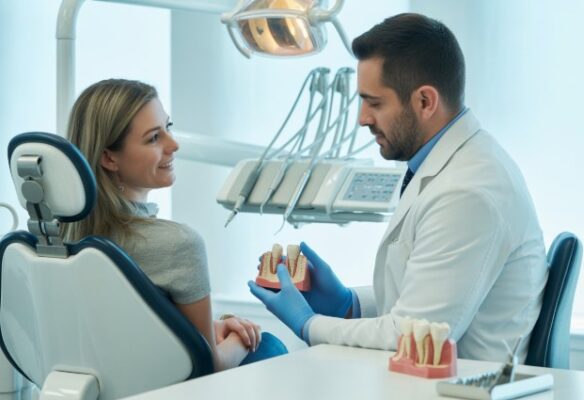
Dental implants can be a game-changer for missing teeth. But here’s the thing—your jawbone needs to be strong enough to anchor them.
When there’s insufficient healthy bone, a dentist will usually recommend a bone graft before proceeding with implants.
People who have lost teeth, battled gum disease, or just have naturally thin jawbones often end up needing bone grafting before getting dental implants. This procedure rebuilds and strengthens the jaw so it can actually hold an implant.
If bone density is too low, implants just won’t work—they might even fail.
Knowing who needs a bone graft and why it matters can help people in Boynton Beach make better choices for their dental health.
The bone graft procedure provides implants with a stable foundation, which significantly boosts their chances of lasting.

Most Boynton Beach implant patients require bone grafting if the jawbone is too thin, too soft, or shrunken due to missing teeth. A graft rebuilds the area, enabling implants to anchor securely and last.
You can sometimes tell if you’ll need more bone support by looking for a few telltale signs.
The biggest one? How long has your tooth been missing? When a tooth has been missing for months or years, the bone in that area begins to shrink because it no longer receives the pressure from chewing.
People who wear dentures for years often need bone grafts. Dentures rest on top of the gums, but they don’t prevent the bone beneath from gradually deteriorating.
Visible changes in the face might show bone loss. The lower face can look shorter or more sunken, and the jaw may feel thinner.
Gum disease is another big culprit. Advanced gum infections can destroy the bone that supports the teeth, and even after treatment, the bone doesn’t always regenerate.
Some people just have naturally thinner jawbones. Dentists catch this during exams with X-rays or 3D scans.
Different situations carry different risks of needing bone grafting before dental implants. Knowing these can help you set realistic expectations.
| Situation | Likelihood of Needing a Graft | Why |
| Tooth lost less than 6 months ago | Low to Moderate | Bone hasn’t had much time to shrink |
| Tooth missing for 1+ years | High | Significant bone loss has likely occurred |
| Previous gum disease | High | The disease destroyed the bone structure |
| Long-term denture wearer | Very High | Years of bone deterioration |
| Tooth lost due to trauma | Moderate | Depends on injury severity |
| Upper back teeth replacement | Moderate to High | The sinus cavity is close to the bone |
If you’re replacing front teeth, you’re usually more likely to skip the graft. These areas tend to have denser bone.
Back teeth, especially in the upper jaw, often require more bone because the sinus cavity is close to the implant site.
Age doesn’t matter as much as people think. Young folks with gum disease might still need grafts, and some older adults with healthy bones might not need them at all.
Boynton Implant and Cosmetic Dentistry offers quick 3D scans and honest implant evaluations to determine whether bone grafting is necessary. Schedule your consultation today.
If you’re ready to get started, call us now!

A dental bone graft is a procedure where your dentist adds natural or synthetic bone material to a damaged area of the jawbone.
Over time, your body replaces the graft with new bone, creating a stronger base so an implant can be placed safely.
A dental bone graft is when a dentist places special bone material into weak areas of the jaw.
The material can come from your own body, a donor, animals, or even a lab. Most of the time, it’s a powder or small granules.
The graft works as a framework. Your bone cells grow around it and slowly replace it with natural bone. Dentists call this osseointegration.
After healing, the jawbone gets thicker and taller. Then, the dentist can place the implant post into solid bone to secure it.
If you don’t have enough bone, the implant just won’t stay secure and could fail.
Healing time depends on the graft size. Small grafts might heal in three to four months, but bigger ones can take six months or even longer before the jaw’s ready for an implant.
Bone grafting is most common after long-term tooth loss, gum disease, or denture wear, and in upper molar areas near the sinus. Some patients, especially those receiving early treatment or who have sufficient bone, can undergo implant placement without grafting.
Dentists typically recommend bone grafting when there’s been significant bone loss in the jaw.
This often occurs when teeth have been missing for an extended period without replacement.
Gum disease is another big reason for grafting. Advanced gum disease destroys bone, leaving nothing for the implant to grip.
People who lose teeth due to trauma or injury often require grafts as well. The impact can damage the bone around the tooth.
People who wear dentures for years also experience bone loss. The jaw needs stimulation from tooth roots to keep its shape.
Some patients have sufficient healthy jawbone for implants immediately. If you’ve just lost a tooth, chances are your bone is still okay.
Younger folks usually have better bone quality. Their jaws can often handle implants without extra work.
The front teeth area requires less bone than the back area. These spots are often suitable for standard implants without grafting.
X-rays and CT scans help dentists measure your bone. These images show whether your jaw can safely support an implant.
Discover whether bone grafting is right for you with a personalized treatment plan from Boynton Implant and Cosmetic Dentistry, with straightforward pricing and options. Contact us today.
If you’re ready to get started, call us now!
The bone grafting process usually takes 3 to 6 months to heal before you can get an implant.
The whole journey—from graft to your final tooth—might last 9 to 18 months. It’s a long haul, so planning matters.
It starts with the bone graft surgery, which takes about 1 to 2 hours. The dentist puts bone material where it’s needed.
Week 1-2: You may experience some swelling and discomfort. The surgical site forms a blood clot to protect it.
Months 1-3: The graft material starts to blend with your bone. New bone cells grow into the graft.
Months 3-6: The bone graft matures and forms a solid base. Dentists use imaging to confirm it’s ready.
Months 6-7: Now it’s time for the implant. This is a separate surgery to be performed after the bone has healed.
Months 9-12: The implant fuses with your bone. Once that’s done, you get the final crown.
| Phase | Timeframe | What Happens |
| Bone Graft Surgery | Day 1 | Graft material is placed in the jaw |
| Initial Recovery | 1-2 weeks | As swelling reduces, the site begins healing |
| Bone Integration | 3-6 months | New bone forms and strengthens |
| Implant Placement | After the graft heals | Titanium post inserted into bone |
| Implant Integration | 3-6 months | The implant fuses with the jawbone |
| Crown Placement | Final stage | A permanent tooth attached to an implant |
The complete dental implant timeline isn’t set in stone. It depends on how quickly you heal and how complex your case is.
Factors such as your overall health, bone quality, and the amount of graft you need all play a role. Some folks move through the steps quickly, while others need a bit more time.
Bone grafting is done under local anesthesia, and many patients choose light sedation. Most people experience a few days of soreness and swelling, which usually respond well to medication, cold packs, and careful home care instructions.
Your dentist numbs the area before starting the bone graft. You won’t feel pain during the procedure, but you might notice some pressure or unusual sensations.
If you’re nervous, some offices offer sedation options. That can make the whole process much less stressful.
Once the anesthesia wears off, swelling and discomfort typically peak within 48 hours. It’s a lot like what you’d feel after a tooth gets pulled.
You can take pain meds your dentist suggests, or stick with over-the-counter stuff if it’s not too bad. Ice packs help reduce swelling, especially on the first day.
Most people go back to normal activities within a few days. It’s smart to skip heavy exercise for about a week, though.
The graft area may feel slightly sore if you touch it or chew on that side for a few days. Soft foods are your friend while things settle down.
Bone graft costs vary based on how much bone is needed, the type of material, and whether it’s combined with implant surgery.
Simple socket grafts may be a few hundred dollars, while larger ridge or sinus grafts cost more. A consult gives an exact quote.
The graft material makes a big difference. Synthetic materials tend to be cheaper than bone taken from your own body or from a donor.
If you’ve lost a lot of bone, you’ll need more grafting material. That bumps up the price, especially for extensive grafting.
Some cases require additional grafting material to give the implant the best chance of success. The amount really depends on your situation.
The dentist’s skill and approach matter, too. Prices can vary by dentist, so it’s worth getting a few quotes before you decide.
Procedures such as sinus lifts or ridge augmentation increase the bill. Note that insurance usually doesn’t cover implants, but some medical plans may help with the bone graft if there’s a specific need.
Dr. Berglass takes the time to really evaluate if you need bone grafting before moving forward with implants. His experience and advanced training help patients get a clear picture of their treatment options.
Dr. Michael Berglass completed a one-year dental implant fellowship at North Shore-Long Island Jewish Hospital.
This specialized training lets him assess bone density with a sharp eye. The evaluation kicks off with a comprehensive exam and imaging.
X-rays and 3D scans show precisely how much bone sits in the jaw. These images make it clear whether the bone can support an implant on its own.
Key factors Dr. Berglass examines include:
If patients have enough bone density, they might qualify for immediate implant placement.
When the bone is insufficient, Dr. Berglass develops a treatment plan that includes grafting as the first step.
Dr. Berglass has over 25 years of experience reviewing these cases and explaining the options to patients in plain, honest language.
Restore your smile with secure, long-lasting implants supported by healthy bone. Schedule your appointment now with Boynton Implant and Cosmetic Dentistry to get started.
Do all dental implant patients need a bone graft first?
Most dental implant patients do not need a bone graft, but you may need one if your jawbone is too thin, too soft, or shrunken after tooth loss. A 3D scan helps your dentist assess bone quantity and quality and determine whether an implant can be placed safely without additional support.
How long after a bone graft can I get my dental implant?
Most patients require 3 to 6 months of healing before an implant can be placed in a grafted area. Small socket grafts may be ready sooner, while larger ridge or sinus grafts take longer. Your dentist monitors healing with X-rays or 3D scans and schedules implant placement to ensure optimal stability.
Is bone grafting safe for seniors or people with medical issues?
Bone grafting can be safe for many older adults and patients with medical conditions when properly planned. Your dentist will review medications, blood thinners, diabetes, smoking, and other risk factors. When needed, they coordinate with your physician and adjust anesthesia, aftercare, and timing to keep treatment safer.
Will I be without a tooth while the bone graft heals?
You are not always without a tooth while a bone graft heals. In many cases, dentists can provide a temporary flipper, Essix retainer, or removable partial denture to fill the gap. Your permanent implant crown is placed only after the graft and implant have fully integrated.
Does insurance help with bone grafting before implants?
Some dental plans contribute to bone grafting when it is medically necessary for implant placement, but coverage varies widely. Many policies classify grafting and implants as major procedures or exclusions. Your dental office can send a pre-treatment estimate and help you explore payment plans, HSAs, or third-party financing.
Can I still get implants if I’ve been told I have “too much bone loss”?
Even if you have significant bone loss, you may still qualify for implants with advanced grafting techniques or full-arch solutions like All-on-4. These approaches use remaining dense bone and, in some cases, reduce the need for large grafts. A 3D scan consultation shows what is realistically possible for your case.

About Dr. Berglass
Dr. Michael Berglass, a dedicated dentist with over 25 years of experience, specializes in dental implants, cosmetic, and general dentistry in Boynton Beach, Florida. A proud alumnus of Stony Brook School of Dental Medicine (DDS, 1996), Dr. Berglass further honed his expertise with residencies in general practice and dental implants at North Shore-Long Island Jewish Hospital. His journey in dentistry has taken him from New York to North Carolina, and now to Florida, where he continues to offer top-notch dental care. Known for his wit and intellect, Dr. Berglass makes every patient's visit comfortable. A member of the American Dental Association and Florida Dentists' Association, he stays at the forefront of dental advancements. Dr. Berglass is committed to providing exceptional care and looks forward to welcoming you to his practice.
Reason To Smile

Phone
Address
2415 Quantum Blvd
Boynton Beach, FL 3342
Office Hours
Mon - Thurs: 8:30AM-5PM
Fri: 8:30AM-1PM
Sat - Sun: Closed


