
Originally published: March 2025 | Updated: July 2026
Reviewed by Dr. Michael Berglass
How Long After Wisdom Teeth Removal Can I Drink? The Ultimate Recovery Checklist
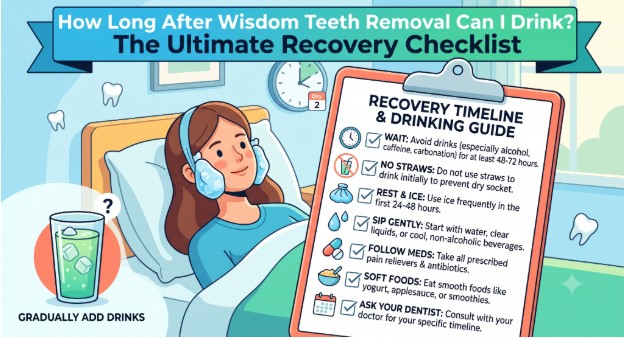
Wisdom teeth recovery dictates what, when, and how a patient drinks for the first 7 to 10 days after extraction. Dr. Michael Berglass, DDS, at Boynton Implant and Cosmetic Dentistry in Boynton Beach, Florida, provides every extraction patient with a staged recovery protocol that protects the blood clot, prevents dry socket, and supports faster tissue healing.
Patients can sip room-temperature water immediately after surgery. All other beverages require a staged reintroduction over the first 10 days.
This checklist breaks down exactly which drinks are safe at each recovery stage and which ones risk dislodging the clot that protects the open socket.
Dr. Berglass at Boynton Implant and Cosmetic Dentistry guides patients through every stage of post-extraction recovery. Call 561-736-1700 or book online.
Wisdom teeth removal is a surgical extraction procedure in which an oral surgeon or dentist removes one or more third molars from the posterior jaw. The procedure typically requires 45 minutes to 2 hours, depending on the severity of impaction, root curvature, and whether bone removal is necessary.
Wisdom teeth are the third set of molars that typically erupt between ages 17 and 25. An oral surgeon or general dentist removes these teeth when they are impacted (trapped beneath bone or gum tissue), partially erupted, or positioned at an angle that threatens adjacent teeth.
The extraction follows a standard surgical sequence. The surgeon administers local anesthesia to numb the posterior jaw and surrounding tissue. Patients who choose sedation receive either nitrous oxide, oral sedation, or IV sedation before the local anesthetic.
The surgeon makes an incision in the gum tissue overlying the tooth, removes any bone obstructing access to the root structure, sections the tooth into smaller pieces if needed for removal, extracts each piece, irrigates the socket to remove debris, and places sutures to close the tissue flap.
A blood clot forms inside the empty socket within the first hour. This clot serves as the biological seal that protects the exposed bone and nerve endings from bacteria, food particles, and temperature changes during the first week of healing.
Every beverage a patient drinks during the first 7 to 10 days after wisdom teeth removal either supports clot stability and tissue healing or threatens both. Temperature, acidity, carbonation, and the method of delivery (straw versus open cup) each carry specific risks to the surgical site.
The blood clot inside the extraction socket is the single most important structure in early recovery. This clot covers the exposed alveolar bone and the nerve endings within the socket.
If the clot dislodges, the bone and nerves become exposed to air, food, and oral bacteria, producing a condition called dry socket (alveolar osteitis).
The American Dental Association identifies dry socket as the most common post-extraction complication, occurring in approximately 2% to 5% of routine extractions and up to 30% of impacted mandibular third molar extractions.
Three beverage-related actions dislodge blood clots. Suction from straws creates negative pressure inside the mouth that pulls the clot out of the socket.
Hot liquids increase blood flow to the surgical site, softening and dissolving the clot matrix. Carbonation produces bubbles that mechanically agitate the clot surface.
Choosing the right beverages at each recovery stage protects the clot and allows the underlying gum tissue to heal without interruption.
If you’re ready to get started, call us now!
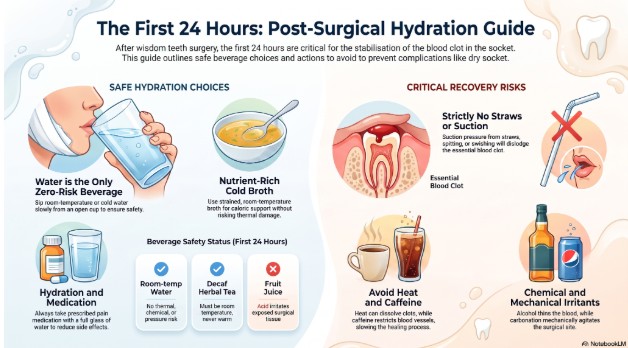
Patients can sip room-temperature or cold water immediately after wisdom teeth removal. No other beverages are safe during the first 24 hours because the blood clot has not yet fully stabilized inside the socket.
Water is the only zero-risk beverage during this window. Sip slowly from an open cup. Do not swish water around the mouth, gargle, or spit forcefully. Each of these actions generates pressure changes inside the oral cavity that can dislodge the fresh clot.
Cold broth (strained, no chunks) provides hydration and minimal caloric support without temperature risk. Allow the broth to cool to room temperature or slightly below before drinking.
| Beverage | Status (0 to 24 Hours) | Reason |
| Room-temperature water | Safe | No thermal, chemical, or pressure risk |
| Cold water | Safe | A mild cold helps reduce swelling |
| Cold strained broth | Safe | Nutrients without temperature risk |
| Decaffeinated herbal tea (cooled) | Safe | Must be room temperature, not warm |
| Coffee (any temperature) | Avoid | Caffeine restricts blood vessels, heat dissolves clots |
| Juice (citrus or acidic) | Avoid | Acid irritates exposed tissue |
| Alcohol | Avoid | Thin blood, interacts with medication |
| Carbonated drinks | Avoid | Bubbles mechanically agitate the clot |
| Any beverage through a straw | Avoid | Suction dislodges the blood clot |
If pain medication was prescribed, take each dose with a full glass of water. Dehydration intensifies the side effects of opioid-class analgesics and slows tissue repair.
After 24 hours, the blood clot has stabilized enough to allow cold, non-acidic beverages other than water. Patients can add milk, seedless smoothies, and protein shakes to their intake. Straws, hot drinks, alcohol, and carbonated beverages remain off-limits.
The clot is more stable at this stage but still vulnerable to suction and heat. Drink everything from an open cup.
Smoothies provide essential calories and micronutrients during periods when solid food intake is limited. Blend soft fruits (banana, mango, avocado) with yogurt or milk. Avoid berries with small seeds. Seeds can lodge in the open socket and introduce bacteria beneath the clot.
Protein shakes mixed with milk or water support tissue repair. Whey- or plant-based protein powders, dissolved in cold liquid, deliver the amino acids necessary for collagen synthesis at the wound site.
Continue drinking water consistently throughout the day. Minimum fluid intake should reach 8 cups (64 ounces) per day to maintain adequate hydration for cellular repair. If nausea from pain medication limits intake, take small sips every 10 to 15 minutes rather than drinking full glasses.
Between 48 hours and 7 days, patients can introduce warm (not hot) beverages including tea and coffee. Straws remain off-limits for the full 7-day window. Alcohol should wait until day 7 at minimum, and longer if the patient is still taking prescription pain medication.
The surgical site transitions from active clot stabilization to early soft tissue closure during this phase.
Warm beverages are acceptable once the liquid temperature falls below the point where it causes discomfort on contact with the surgical area. Test the temperature on the inside of the wrist before drinking. If it feels warm but not hot on the wrist, it is safe for the mouth.
Patients can add warm tea, warm coffee (not hot), electrolyte drinks, and diluted non-acidic juice to their daily intake.
Rinse gently with warm salt water (one-half teaspoon salt per 8 ounces of water) after every meal and after drinking anything other than plain water. This rinse removes residual sugar and food particles from the healing socket without the mechanical force of brushing near the site.
Continue avoiding straws, alcohol, and very hot liquids throughout the full 7-day period.
If you’re ready to get started, call us now!
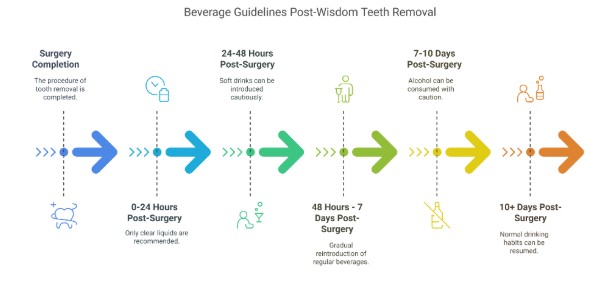
Most patients return to unrestricted beverage choices between day 7 and day 10. Patients still taking prescription pain medication should continue avoiding alcohol until the medication course ends.
The gum tissue has closed over the socket in most cases by day 7. Patients can reintroduce hot beverages (coffee, tea, hot chocolate) if the temperature does not cause pain at the extraction site. Carbonated drinks are acceptable at this stage. Straw use can resume with gentle suction only.
Alcohol is permissible on day 7 if the patient has completed all prescription pain medication. Mixing alcohol with opioid analgesics or prescription-strength NSAIDs increases sedation risk and can cause gastrointestinal bleeding. Confirm with your prescribing dentist before combining.
All beverage restrictions are lifted by day 10 for uncomplicated extractions. If pain, swelling, or a foul taste persists at this stage, contact Dr. Berglass immediately. These symptoms may indicate a delayed infection or incomplete socket healing requiring clinical evaluation.
| Recovery Stage | Safe to Add | Still Avoid |
| 0 to 24 hours | Water, cold broth, cooled herbal tea | Everything else, all straws |
| 24 to 48 hours | Milk, seedless smoothies, protein shakes | Straws, hot drinks, alcohol, carbonation |
| 48 hours to 7 days | Warm tea, warm coffee, electrolyte drinks | Straws, alcohol, very hot liquids |
| 7 to 10 days | Hot drinks, carbonation, gentle straw use | Alcohol (if still on medication) |
| 10+ days | All beverages | None (monitor for pain) |
Post-extraction pain lasting beyond 5 days? Boynton Implant and Cosmetic Dentistry provides same-week follow-up evaluations. Call 561-736-1700 or schedule online.
Patients should avoid straws for 7 days, hot beverages for 48 hours, carbonated drinks for 7 days, alcohol for 7 to 10 days, and acidic juices for 48 hours after wisdom teeth removal. Each of these carries a specific mechanism for clot disruption or tissue irritation.
Straw suction generates negative intraoral pressure that acts directly on the blood clot. The clot sits in an open socket with no mechanical retention other than its adhesion to the socket walls. Even a moderate suction force can peel the clot away from the bone surface.
Dry socket produces severe, radiating pain that begins 2 to 4 days after extraction and intensifies over the following 48 hours.
Treatment requires the dentist to irrigate the socket and place a medicated dressing (typically eugenol-soaked gauze) to protect the exposed bone while a new granulation tissue layer forms. Patients who develop dry socket add 7 to 10 days to their total recovery timeline.
Drink from open cups or glasses for the full 7-day period. If the extraction involved impacted third molars or bone removal, Dr. Berglass may extend the straw restriction based on healing progress at the post-operative visit.
Alcohol interacts with every common post-extraction pain medication. Opioids (hydrocodone, oxycodone) combined with alcohol increase central nervous system depression, raising the risk of respiratory slowing, excessive sedation, and loss of consciousness.
NSAIDs (ibuprofen, naproxen) combined with alcohol increase gastrointestinal bleeding risk.
Beyond medication interactions, alcohol acts as a blood thinner. Ethanol inhibits platelet aggregation, which weakens the clot structure inside the socket.
The Mayo Clinic recommends avoiding alcohol for a minimum of 24 hours after any surgical procedure, and most oral surgeons extend this to 7 to 10 days for third molar extractions.
Inform your dentist about all medications, supplements, and substances you are currently taking before the extraction date. This disclosure allows the surgical team to adjust prescriptions and post-operative instructions accordingly.
The best recovery beverages combine hydration, caloric support, and zero risk of blood clot formation. Water, cold strained broth, seedless smoothies, protein shakes, coconut water, and cooled herbal tea meet all three criteria during the first 48 hours.
Water remains the highest-priority beverage across every recovery stage. Room-temperature water poses zero risk to the clot and maintains the hydration level necessary for cellular repair and medication metabolism.
Smoothies blended with banana, mango, avocado, yogurt, and milk deliver calories, potassium, and protein without requiring chewing. Avoid adding strawberries, blackberries, or any fruit with small seeds. Strain the smoothie through a mesh sieve if needed.
Coconut water provides natural electrolytes (potassium, sodium, magnesium) without the carbonation found in sports drinks. This makes coconut water a safer electrolyte source than carbonated alternatives during the first 7 days.
Bone broth (strained and cooled to room temperature) provides collagen precursors and amino acids that support soft-tissue repair at the extraction site. Broth also provides sodium, which helps maintain fluid balance when solid food intake is limited.
Once a wisdom tooth is removed, the empty socket begins to lose bone density within the first 30 days. Most patients do not need to replace a wisdom tooth, but those who have lost adjacent teeth or had bone removed during a surgical extraction experience accelerated resorption in the posterior jaw.
Patients who lost other teeth alongside the wisdom tooth extraction, or who required significant bone removal during a surgical extraction, should ask Dr. Berglass whether bone grafting at the time of removal preserves the option for future dental implants.
Socket preservation grafting at the time of extraction takes 5 to 10 minutes and prevents months of additional bone reconstruction later.
For patients already missing teeth in other areas of the mouth, the extraction visit is the right time to discuss implant candidacy and timeline planning.
Missing teeth beyond your wisdom teeth? Boynton Implant and Cosmetic Dentistry offers CBCT-guided implant placement for lasting results. Call 561-736-1700 or book your consultation.
When is it safe to drink water after wisdom teeth extraction?
Patients can sip room-temperature water immediately after wisdom teeth removal. Drink slowly from an open cup without swishing, gargling, or spitting forcefully. These actions create pressure changes inside the mouth that can dislodge the blood clot forming inside the extraction socket.
How long should I wait before consuming coffee after wisdom teeth removal?
Wait at least 48 hours before drinking coffee after wisdom teeth extraction. Hot coffee dissolves the blood clot protecting the socket, and caffeine constricts blood vessels, which slows nutrient delivery to the surgical site. When reintroducing coffee, let it cool to warm and drink from an open cup.
What is the recommended wait time before drinking alcohol after wisdom teeth surgery?
Wait 7 to 10 days before consuming alcohol after wisdom teeth surgery. Alcohol thins the blood by inhibiting platelet aggregation, which weakens the clot structure inside the socket. Alcohol also interacts dangerously with prescribed opioid and NSAID pain medications, increasing sedation and gastrointestinal bleeding risk.
When can I start having hot beverages after wisdom teeth extraction?
Hot beverages require a minimum 48-hour wait after wisdom teeth removal. Heat increases blood flow to the surgical site, softening and dissolving the protective clot. After 48 hours, test the beverage temperature on the inside of your wrist before drinking. If it feels warm but not hot, it is safe for the mouth.
Is it safe to drink through a straw after wisdom teeth removal?
Avoid straws for a full 7 days after wisdom teeth extraction. The suction force creates negative pressure inside the mouth, pulling the blood clot directly out of the socket. Losing the clot causes a dry socket (alveolar osteitis), which can produce severe pain and add 7 to 10 days to the total recovery time.
Can I drink carbonated beverages like soda a week after wisdom teeth removal?
Carbonated drinks are acceptable after 7 days for most patients with uncomplicated extractions. Before day 7, carbonation bubbles mechanically agitate the blood clot surface inside the socket. When reintroducing soda or sparkling water, drink slowly from an open glass and avoid combining carbonation with the use of a straw.
What are the signs of dry socket after wisdom teeth removal?
Dry socket produces severe, radiating pain that begins 2 to 4 days after extraction and worsens over the following 48 hours. Patients typically notice a visible empty socket without a dark blood clot, a foul taste or odor, and pain that spreads to the ear, eye, or temple on the same side.
How much water should I drink daily during wisdom teeth recovery?
Drink at least 8 cups (64 ounces) of water per day during wisdom teeth recovery. Adequate hydration supports cellular repair at the extraction site, maintains saliva production that protects against bacterial infection, and reduces common side effects of opioid pain medications, including nausea and constipation.

About Dr. Berglass
Dr. Michael Berglass, a dedicated dentist with over 25 years of experience, specializes in dental implants, cosmetic, and general dentistry in Boynton Beach, Florida. A proud alumnus of Stony Brook School of Dental Medicine (DDS, 1996), Dr. Berglass further honed his expertise with residencies in general practice and dental implants at North Shore-Long Island Jewish Hospital. His journey in dentistry has taken him from New York to North Carolina, and now to Florida, where he continues to offer top-notch dental care. Known for his wit and intellect, Dr. Berglass makes every patient's visit comfortable. A member of the American Dental Association and Florida Dentists' Association, he stays at the forefront of dental advancements. Dr. Berglass is committed to providing exceptional care and looks forward to welcoming you to his practice.
Reason To Smile

Phone
Address
2415 Quantum Blvd
Boynton Beach, FL 3342
Office Hours
Mon - Thurs: 8:30AM-5PM
Fri: 8:30AM-1PM
Sat - Sun: Closed


