
Originally published: October 2024 | Updated: November 2025
Reviewed by Dr. Michael Berglass
Dental Implants Risks and Benefits | What Every Patient Should Know
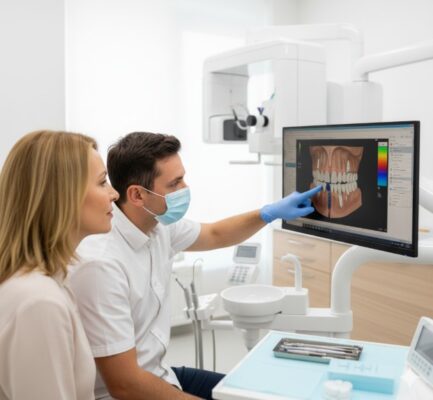
According to the American Association of Oral and Maxillofacial Surgeons, 69% of adults ages 35 to 44 have lost at least one permanent tooth.
Dental implants replace missing teeth with lifelike, fixed restorations that preserve bone and chewing power.
For healthy candidates and skilled surgeons, success rates exceed those of the vast majority of alternatives, and most patients report less post-op discomfort than expected.
Dental implants are a safe and effective way to replace missing teeth, with a success rate of over 95%. They look and function like natural teeth, helping restore confidence and improve quality of life.
Getting dental implants involves a surgical procedure, which can sound scary. However, modern techniques have made the process much more comfortable and predictable. Many patients report less pain than they expected.
The benefits of dental implants often outweigh the temporary discomfort of the procedure.
It’s normal to have questions and concerns about dental implants. Learning the facts can help ease worries and make an informed decision.
This article aims to separate fact from fiction and give a clear picture of what to expect from dental implants.
Dental implants evolved from crude replacements to today’s CBCT-planned titanium fixtures that fuse with bone.
Modern implants are biocompatible, precisely positioned, and restored with custom ceramic crowns—delivering a natural look, stable chewing, and long service life when placed by trained clinicians and maintained with good hygiene.
Around 600 AD, the Mayans used shell pieces as early dental implants. They shaped these shells like teeth and put them right into the jawbone. It was a simple but clever idea.
In ancient Egypt, people tried using gold wires to hold fake teeth in place. The ancient Chinese carved bamboo pegs to replace teeth.
These early attempts were not always successful. They often caused pain and didn’t last long. But they show that people have wanted to fix missing teeth for thousands of years.
Today’s dental implants are very different from the old ones. They use strong, safe materials that the body accepts well. Titanium is often used because it bonds with bone.
Modern implants look and work like real teeth. They have three main parts:
Dentists now use 3D imaging to plan implant surgery. This helps make sure the implant fits just right. New coating materials help implants bond to bone faster.

Most implant fears come from myths about pain, age limits, and “fake” results. With local anesthesia (and optional sedation), comfort is prioritized; candidacy hinges on health and bone, not age; and modern ceramics match adjacent teeth so closely that.
Dental implant surgery is not painful. Dentists use local anesthesia to numb the area before the procedure, and some patients may also receive sedation for extra comfort.
Mild discomfort after surgery is normal. It can usually be managed with over-the-counter pain medication, and most people report less pain than they expected.
Recovery is often quick. Many patients return to work the next day. The healing process varies, but most feel back to normal within a week or two.
Age alone does not disqualify someone from getting dental implants. Health is more important than age when considering implants.
Many factors affect implant candidacy. These include:
Older adults are often excellent candidates for implants. They may have more stable lifestyles and better oral hygiene habits.
Implants can improve quality of life at any age. They help with eating, speaking, and confidence.
Modern dental implants are designed to look natural. They blend in with other teeth and are hard to spot.
Dentists use advanced materials and techniques to match implants to natural teeth. This includes:
The visible part of an implant, called the crown, is designed to mimic a real tooth. It reflects light like natural enamel.
Implants can restore not just teeth but also confidence. Many people forget they even have implants after a while.
Are you curious about the results? Read our success stories to see how dental implants have transformed the smiles and lives of our patients. Discover real-life experiences that help debunk common myths about the procedure.
If you’re ready to get started, call us now!
Implant risks are real but generally low with proper planning: infection around the implant, early non-integration, nerve/sinus proximity issues, and medical factors like smoking or uncontrolled diabetes.
CBCT mapping, guided surgery, sterile protocol, and structured follow-ups reduce complications and support long-term success.
Dental implant procedures are usually safe, but there are some risks. Infection at the implant site can occur in rare cases and, if left untreated, may lead to implant failure.
Nerve damage is another rare complication. It can cause numbness or tingling in the mouth. Most nerve issues are temporary and resolve on their own.
Upper jaw implants may cause sinus problems. The implant could potentially penetrate the sinus cavity, causing discomfort.
Implant rejection is uncommon but possible. The body may not accept the implant, requiring its removal.
Boynton Implant and Cosmetic Dentistry takes several steps to reduce implant risks. They use advanced 3D imaging to plan precise implant placement. This helps avoid nerves and sinus problems.
The practice follows strict sterilization protocols, which greatly lowers infection risk. It also uses high-quality implant materials to minimize the risk of rejection.
Patients receive detailed aftercare instructions. Proper home care is key to preventing complications. The dentists closely monitor healing and address any issues promptly.
Regular follow-up appointments help detect problems early. This quick intervention can often save an at-risk implant.
Leaving missing teeth unreplaced carries its own set of risks. These often outweigh the small risks of dental implants.
Jawbone loss is a major concern. Without tooth roots, the jawbone starts to shrink. This can alter facial appearance and make future implants more difficult.
Shifting of the remaining teeth is common. Teeth may tilt or move to fill the gap, leading to bite problems and making cleaning harder.
Missing teeth can affect speech and eating. People may avoid certain foods, which can affect nutrition. Speech may become unclear, affecting confidence.
Dental implants help prevent these issues. They preserve bone, keep teeth in place, and restore normal function. The benefits often make implants the safer long-term choice.
| Potential Risk | What It Means | How We Reduce It |
| Infection / Peri-implantitis | Inflammation around the implant | Sterile protocol, hygiene coaching, review visits |
| Early Non-integration | The implant doesn’t fuse initially | Atraumatic technique, stability metrics, case selection |
| Nerve/Sinus Proximity | Tingling or sinus irritation | CBCT mapping, guided surgery, depth control |
| Medical Factors | Diabetes, smoking, and bruxism | Physician coordination, cessation plan, nightguard |
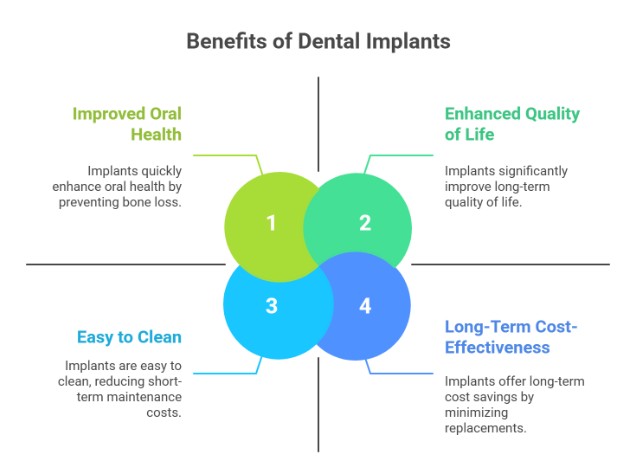
Implants preserve jawbone, don’t rely on neighboring teeth, and restore near-natural chewing and speech. Patients typically report greater comfort and confidence with removable options.
With consistent hygiene and maintenance, implants can last decades, offering strong lifetime value despite a higher upfront cost.
Dental implants help prevent jawbone loss. When a tooth is lost, the jawbone starts to shrink. Implants stop this process by acting like natural tooth roots.
Implants don’t affect nearby teeth. Other tooth replacement options often require grinding down adjacent teeth. This can weaken them over time.
They’re easy to clean. You can brush and floss implants just like natural teeth. This helps keep your gums healthy.
Implants have a high success rate. With proper care, they can last a lifetime.
Dental implants look and feel like real teeth. This can boost self-esteem and confidence when smiling or speaking.
They allow people to eat their favorite foods again. Unlike some other options, implants restore nearly full chewing power.
Implants improve speech. They don’t slip like dentures can, so people can speak clearly without worry.
They’re comfortable. Implants become a permanent part of your mouth without discomfort or irritation.
While the upfront cost is higher, implants can be more cost-effective in the long run. If properly cared for, they rarely need replacement.
Other options, like dentures or bridges, may need to be replaced every 5-10 years, which can add up over time.
Implants protect other teeth from damage. This can prevent future dental work and expenses.
They maintain facial structure. This can avoid the sunken look that often comes with tooth loss, potentially saving on cosmetic procedures later.
| Factor | Dental Implant | Dental Bridge | Removable Denture |
| Longevity | 15+ years; often decades with maintenance | ~7–10 years average | ~5–8 years (reline/replace) |
| Bone Preservation | Yes (stimulates jawbone) | No | No (can accelerate loss) |
| Prep to Neighbor Teeth | None | Requires shaping adjacent teeth | None |
| Chewing Efficiency | Near-natural | Good | Reduced; can shift |
| Comfort/Confidence | Fixed, stable, natural look | Fixed | May loosen; adhesives |
| Maintenance | Brush/floss like teeth; hygiene tools | Floss threaders | Daily removal, cleaning, and relining |
| Lifetime Value | High | Moderate | Lower |
Expect a planned, stepwise journey: exam and CBCT imaging, a numbed placement appointment, short early healing, bone-to-implant fusion (osseointegration), abutment connection, and a custom crown.
Most patients resume normal routines quickly and report milder soreness than expected, managed with OTC medication andy.
| Stage | What Happens | Typical Timing |
| Consult & Planning | Exam, CBCT imaging, candidacy, options, estimate | Week 0–2 |
| Placement Surgery | Local anesthesia; implant placed (30–60 min/site) | Day 0 |
| Early Healing | Mild swelling/bruising; soft foods; hygiene guidance | Days 1–7 |
| Osseointegration | Bone fuses to the implant | Weeks 6–16+ |
| Abutment & Impressions | Tissue shaping; digital impressions | Week 8–16 |
| Final Crown | Custom ceramic crown; bite check | Week 12–24 |
The dentist starts by doing a full exam. This includes:
They check if you have enough bone for the implant. If not, you might need a bone graft first. The dentist also makes a plan for your new tooth. This covers size, shape, and color.
Your dentist will explain the process and answer questions. They may give you a timeline for the whole procedure. You’ll also learn about costs and insurance coverage.
On surgery day, you’ll get local anesthesia to numb the area. Some patients choose sedation for extra comfort. The dental implant procedure then follows these steps:
The implant needs time to fuse with the bone, which takes about 3-6 months. After this, you’ll have another surgery to attach the abutment, which holds the new tooth.
Right after surgery, you might have:
Your dentist will give you care instructions. These often include:
Most people can return to work the next day, but should avoid hard foods and intense exercise for a week or two. Good oral hygiene is key to preventing infection.
The full dental implant healing process can take 3-9 months. Here’s a typical timeline:
Your timeline may vary based on your health and if you need a bone graft. The dentist will check your progress at follow-up visits. Once fully healed, your new tooth should look and work naturally.
If you’re ready to get started, call us now!
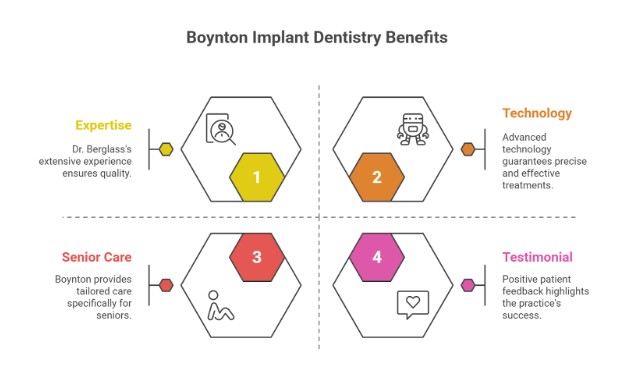
Boynton Implant & Cosmetic Dentistry combines CBCT-guided planning, gentle technique, high-quality implant systems, and clear aftercare.
Dr. Michael Berglass personalizes timelines, materials, and sedation options, and provides structured reviews to monitor healing—optimizing comfort, precision, and long-term outcomes for each patient.
Dr. Michael Berglass leads the team at Boynton Implant and Cosmetic Dentistry. He has years of experience in implant dentistry and stays current with the latest techniques.
Dr. Berglass is known for his gentle approach and attention to detail.
His expertise covers a wide range of implant procedures, from single-tooth replacements to full-mouth restorations. He has helped many patients in Boynton Beach regain their smiles and confidence.
Dr. Berglass also focuses on patient education. He takes time to explain treatment options and answer questions. This helps patients make informed decisions about their dental care.
Boynton Implant and Cosmetic Dentistry uses cutting-edge technology for dental implant procedures. Their advanced equipment includes:
These tools allow for more accurate diagnoses and treatment planning. They also help reduce procedure time and improve patient comfort.
The practice also uses the latest implant materials and techniques. This includes options like All-on-4 dental implants, which can restore a full arch of teeth in one day.
Boynton Implant and Cosmetic Dentistry offers specialized care for senior patients. They understand the unique dental needs of older adults and provide tailored solutions.
The team takes extra time with senior patients to ensure comfort and understanding. They offer:
The practice also considers factors like medications and overall health when planning treatments for seniors. This ensures safe and effective dental implant procedures.
Many patients praise their experience at Boynton Implant and Cosmetic Dentistry. One recent patient shared:
“I was nervous about getting implants, but Dr. Berglass and his team put me at ease. They explained everything clearly and made sure I was comfortable throughout the process. My new implants look and feel great. I can smile confidently again!”
This testimonial reflects the practice’s commitment to patient satisfaction and quality care. It showcases their ability to address patient concerns and deliver excellent results.
Are you interested in learning more about dental implants? Take the next step towards a healthier, fuller smile by scheduling a consultation with Dr. Berglass today to discuss how implants can specifically benefit you.
Are dental implants safe and effective for tooth replacement?
Yes. For properly selected patients and experienced clinicians, dental implants show high long-term success, preserve jawbone, and restore near-natural chewing and speech—often outperforming removable options while looking indistinguishable from natural teeth.
What complications can arise from dental implant surgery?
Complications are uncommon but can include infection (peri-implantitis), early non-integration, nerve or sinus proximity issues, and damage to nearby teeth. Careful CBCT planning, sterile technique, smoking cessation, and structured follow-ups significantly reduce risk and allow early intervention if problems appear.
How long do dental implants typically last?
With good oral hygiene and regular checkups, implants can last decades. The crown may need to be replaced over time due to normal wear, but the titanium implant can remain stable long-term when gums stay healthy and bite forces are well managed.
Who is a good candidate for dental implants?
Candidates have healthy gums, adequate bone (or are open to bone grafting/sinus lift), and stable medical conditions. Smoking, uncontrolled diabetes, or untreated gum disease increase risk; a comprehensive exam with imaging confirms suitability and the best treatment plan.
What should I expect during recovery from a dental implant procedure?
Expect mild soreness and swelling for 24–72 hours, which can be managed with OTC medication and cold compresses. Soft foods and gentle hygiene are recommended initially. Bone fuses to the implant over weeks to months; you’ll attend scheduled reviews to monitor healing.
How do dental implant costs compare to bridges or dentures?
Implants cost more upfront but often deliver the best lifetime value: they preserve bone, don’t rely on neighboring teeth, and rarely need frequent replacement. Insurance may cover portions of treatment; many practices offer transparent estimates and financing options.
How long does the full implant process take?
Most straightforward cases take about 3–6 months from placement to final crown, depending on healing and whether grafting is needed. You’ll use a temporary solution during integration, with your dentist guiding each milestone and confirming stability before final restoration.

About Dr. Berglass
Dr. Michael Berglass, a dedicated dentist with over 25 years of experience, specializes in dental implants, cosmetic, and general dentistry in Boynton Beach, Florida. A proud alumnus of Stony Brook School of Dental Medicine (DDS, 1996), Dr. Berglass further honed his expertise with residencies in general practice and dental implants at North Shore-Long Island Jewish Hospital. His journey in dentistry has taken him from New York to North Carolina, and now to Florida, where he continues to offer top-notch dental care. Known for his wit and intellect, Dr. Berglass makes every patient's visit comfortable. A member of the American Dental Association and Florida Dentists' Association, he stays at the forefront of dental advancements. Dr. Berglass is committed to providing exceptional care and looks forward to welcoming you to his practice.
Reason To Smile

Phone
Address
2415 Quantum Blvd
Boynton Beach, FL 3342
Office Hours
Mon - Thurs: 8:30AM-5PM
Fri: 8:30AM-1PM
Sat - Sun: Closed


