
Originally published: December 2025 | Reviewed by Dr. Michael Berglass
Dental Implants and Osteoporosis: Can You Still Replace Missing Teeth Safely?
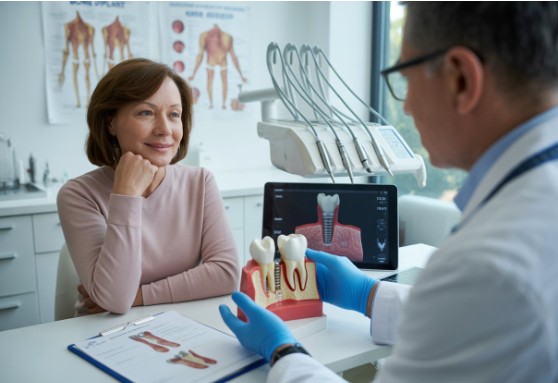
If you have osteoporosis, you might worry that weak bones mean you can’t get dental implants to replace missing teeth.
The good news? Many people with osteoporosis are still candidates for dental implant treatment.
Dental implants are generally considered safe and effective for patients with osteoporosis, though the treatment requires careful planning and evaluation by an experienced dental team.
The connection between bone health and tooth replacement success is important because dental implants require strong jawbone tissue to fuse properly.
Osteoporosis affects bone density throughout the body, including the jaw. This can make the process more complex, but it doesn’t automatically rule out tooth implants as an option.
From medication considerations to success rates and special planning steps, several factors determine whether someone with osteoporosis can safely receive dental implants.
This article is for general education only and doesn’t replace medical advice. Your dentist and physician should make the final call on whether dental implants are appropriate in your situation.
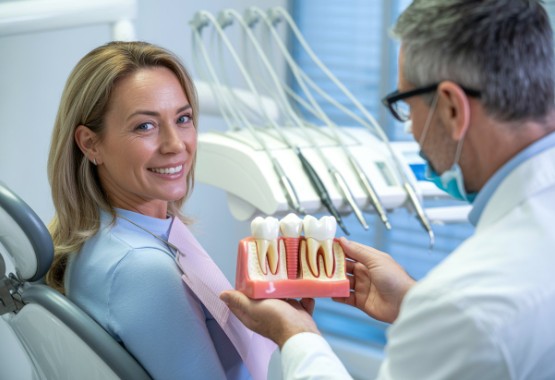
Most people with osteoporosis can still get dental implants safely. Osteoporosis alone rarely precludes treatment; your jawbone quality, overall health, and bone medications require careful review before planning surgery.
Research shows that osteoporosis and dental implants can be compatible.
A 2017 literature review confirmed that dental implants are safe for patients with this bone condition.
The key factor is jawbone density. Even with osteoporosis affecting other parts of the body, many patients still have enough jawbone to support implants.
Dentists evaluate each case individually based on the patient’s specific bone quality and medical history.
Some patients may need additional procedures, such as bone grafting, to strengthen the jaw before implant placement. This helps create a solid foundation for the implant to fuse with the bone. Certain osteoporosis medications, including bisphosphonates such as Fosamax, can affect healing, so dentists review the medication type, dosage, and duration and adjust the plan accordingly.
Working with an experienced implant dentist improves the chances of successful outcomes for patients with osteoporosis.
Boynton Implant and Cosmetic Dentistry helps South Florida patients with osteoporosis plan safe, effective tooth replacement using advanced imaging and coordination with physicians. Schedule a consultation today.
If you’re ready to get started, call us now!
Osteoporosis can reduce overall bone density, but your jawbone may still have enough height and width for implants.
Dentists use X-rays and 3D scans to measure jawbone support and decide whether implants, grafts, or longer implants are appropriate.
The jawbone has unique properties that set it apart from other bones affected by osteoporosis.
Unlike the spine and hips, jawbone density can be influenced by regular chewing forces and the presence of teeth or implants.
When teeth are missing, the jawbone loses stimulation and shrinks faster.
Bone loss occurs even without osteoporosis, but the condition accelerates the process.
The jawbone also has a thicker outer layer of dense bone compared to the spine, which can help support implants.
Studies indicate that osteoporosis status has not consistently been a risk factor for dental implant failure, according to research reviews.
The jaw receives constant blood flow and mechanical stress from daily activities like eating and speaking. These factors help the bone maintain some strength even when osteoporosis affects other areas.
Patients with low jawbone density have several options to improve implant stability.
Bone grafting can rebuild the jawbone and provide a stronger foundation for implants.
Bone compression and bone densification are specialized techniques that enhance implant stability during placement.
These methods compact existing bone tissue to create better support. Dentists may also use longer or wider implants to distribute forces across more bone.
In cases of severe upper-jaw bone loss, surgeons can anchor implants in the cheekbone instead.
Each treatment plan depends on the extent of bone loss and the patient’s overall health status.
The bigger concern than osteoporosis itself is medication. Long-term use of some bone-strengthening drugs—especially high-dose or IV bisphosphonates and certain antiresorptives—can slightly increase the risk of medication-related osteonecrosis of the jaw (MRONJ) after surgery.
Bisphosphonates are common osteoporosis medications that slow bone loss.
Popular versions include Fosamax and Boniva. Another drug called denosumab works differently but serves a similar purpose.
These medications can cause a rare condition called osteonecrosis of the jaw.
The jawbone starts to die and doesn’t heal properly. This problem is also called MRONJ, which stands for medication-related osteonecrosis of the jaw.
The risk stays very low for most patients.
People taking oral bisphosphonates face a lower risk than those receiving IV versions. Denosumab may have a similar risk profile for jawbone complications to some IV bisphosphonates, especially at higher doses, so your dentist will want to understand your full medication history.
Certain osteoporosis medications have been linked to this serious but uncommon jaw condition.
Patients who smoke, have gum disease, or take steroids face a higher chance of developing problems.
Patients should tell their dentist about all osteoporosis medications they take.
Routine dental work, such as cleanings, fillings, and root canals, can proceed as usual while on these medications.
For dental implants or tooth extractions, the approach depends on the type and duration of the medication.
Your implant dentist will coordinate with the doctor who prescribed your osteoporosis treatment to decide whether any changes, added precautions, or preventive antibiotics are appropriate.
Some patients need closer monitoring during healing. Each case requires individual evaluation based on bone health, medication history, and overall medical condition.
Current research suggests osteoporosis alone does not significantly lower implant survival when treatment is well planned.
Success rates remain high, although some studies show slightly more bone loss around implants in osteoporotic patients, especially when additional risk factors are present.
Research comparing implant survival rates has looked at patients with and without osteoporosis over multiple years.
Studies examining osseointegration in patients with reduced bone density show that implants can still fuse to bone successfully in many cases.
The data reveals some key differences:
Studies confirm that the risk of dental implant failure increases when bone quality is compromised.
However, the gap between the two groups is often smaller than patients expect.
Marginal bone loss around implants is slightly higher in patients with osteoporosis.
This affects the implant’s long-term stability but doesn’t always result in complete failure.
The bone’s ability to support the implant depends on both bone density and the patient’s overall health management.
Explore personalized implant options for osteoporosis, supported by advanced bone mapping and planning, at Boynton Implant and Cosmetic Dentistry. Contact our South Florida office to discuss your treatment.
If you’re ready to get started, call us now!
Several key factors determine whether someone with osteoporosis can safely receive dental implants.
Bone health and current medications play a major role, while overall health habits and oral hygiene also affect success rates.
Patients should consider their current bone density levels before pursuing implants.
Those taking bisphosphonates for osteoporosis need to discuss timing with their dentist, as these medications can affect healing.
Key bone-related questions include:
The jawbone needs sufficient height and width to support traditional implants.
Some patients may be candidates for dental implants if they have at least 10mm of bone height and 5mm of width.
When bone loss is severe, zygomatic implants anchored in the cheekbone offer an alternative.
These specialized implants bypass weak jaw areas entirely. Medication timing matters significantly.
Your dentist may consult your physician to determine whether any adjustments to your osteoporosis treatment are appropriate around implant placement to help reduce complications.
Your overall oral health significantly shapes how well dental implants perform. If you have active periodontal disease, your dentist needs to treat it before you consider surgery.
Important health considerations:
Patients with osteoporosis can still get dental implants if their health supports good healing. Bone density issues make oral care even more critical.
People who stick to healthy habits and keep their conditions in check usually see better results. It pays off to be proactive about these things.
At Boynton Implant and Cosmetic Dentistry, Dr. Michael Berglass has decades of experience placing implants for older adults, including patients with osteoporosis.
The team uses 3D imaging, conservative surgical plans, and close coordination with physicians to balance the benefits of implants and the risks to bone health.
The team at Boynton Implant and Cosmetic Dentistry uses advanced imaging to check your bone quality. They also talk with your doctor to build a safe treatment plan.
Boynton Implant & Cosmetic Dentistry begins with detailed 3D scans to precisely assess the density of your jawbone.
These scans help the oral surgeon identify strong bone and determine whether special techniques are needed.
For lower bone density, your dentist might suggest a few bone-saving options:
They’ll tailor the plan to your bone condition and select materials and sizes that best fit your jaw.
Your implant dentist will consult with your doctor before starting treatment, as some osteoporosis medications can affect how the jawbone heals around implants.
If you’re taking bisphosphonates or similar drugs, your dental and medical teams may adjust timing or precautions to reduce complication risk.
They’ll review your medications, supplements, and health conditions to determine the safest approach and continue to communicate as you heal.
Getting ready for dental implants with osteoporosis requires careful planning. You’ll need to work closely with your dental team and may need to adjust your medications or add treatments to boost your jawbone.
It’s often helpful to have up-to-date bone density information. Your dentist and physician can determine whether a new scan is needed and review imaging to assess whether your jaw is strong enough or whether bone grafting should be considered first.
Bone grafting creates a stronger foundation when bone density is low.
If you’re taking bisphosphonates for osteoporosis, talk to your dentist and doctor. Sometimes, pausing these meds before surgery makes sense, but it really depends on your health and fracture risk.
Your doctor may recommend appropriate calcium and vitamin D levels to support bone health before and after surgery. Follow their guidance rather than starting or changing supplements on your own.
Quitting smoking is one of the most important steps you can take. Tobacco reduces blood flow, slows bone healing, and increases the risk of implant complications.
Maintain good oral hygiene before your procedure. Healthy gums and a clean mouth significantly reduce infection risk during healing.
Dental implants need strong bone to integrate correctly. Bone healing can take longer if you have osteoporosis, so the wait for final crowns may be extended compared with patients who have normal bone density.
It’s important to follow post-surgery instructions closely during this extended healing period.
Here’s what patients should do:
Don’t put pressure on the implant site for the first few months. Hard or crunchy foods can mess with healing, so it’s best to avoid them. Your dentist will monitor progress with regular appointments and X-rays.
If your doctor has recommended calcium or vitamin D, continue using them as directed after surgery to support overall bone health while the implant heals.
Ready to replace missing teeth safely despite bone loss or osteoporosis? Start your treatment journey with Boynton Implant and Cosmetic Dentistry. Schedule your appointment today.
Can I get dental implants if I have osteoporosis?
Yes, most people with osteoporosis can still receive dental implants safely. A detailed evaluation of your jawbone density, medications, and overall health helps your dentist determine if implants are suitable and whether bone grafting or modified techniques are needed for long-term stability.
Does osteoporosis make dental implants less successful?
Osteoporosis doesn’t automatically reduce implant success rates. Studies show most patients achieve similar outcomes when bone quality and health are managed. Careful planning, stable bone density, and good oral hygiene greatly improve success, even when osteoporosis is present.
How do osteoporosis medications affect dental implant safety?
Certain bone-strengthening drugs—especially bisphosphonates or denosumab—can affect jawbone healing and raise the rare risk of osteonecrosis. Your dentist and physician coordinate care to manage timing, monitor bone response, and ensure safe treatment during the period before and after dental implant surgery.
Can bone grafting help patients with osteoporosis get implants?
Yes. Bone grafting rebuilds or strengthens jawbone tissue before implant placement. For people with osteoporosis, grafts improve density and support implant fusion. Your dentist uses scans to determine whether grafting, mini-implants, or alternative placements will deliver the best results.
Are dental implants riskier for women taking osteoporosis medication?
Women on long-term osteoporosis medications can still get implants safely, but their dentist will review the specific drug, dosage, and duration. Coordinating care with your doctor minimizes complications to the jawbone.
Do dental implants take longer to heal if you have osteoporosis?
Healing can take slightly longer because osteoporosis may slow bone repair. Regular checkups and strong oral hygiene support implant fusion. With good medical and dental management, many patients heal predictably and enjoy the same long-term success as non-osteoporotic patients.
How should I prepare for dental implant surgery if I have osteoporosis?
Work closely with your dentist and physician before implant surgery. Keep your bones and gums healthy, review medications, avoid smoking, and follow all pre-surgical instructions. Proper planning and stable bone density significantly reduce risks and promote faster, safer healing.

About Dr. Berglass
Dr. Michael Berglass, a dedicated dentist with over 25 years of experience, specializes in dental implants, cosmetic, and general dentistry in Boynton Beach, Florida. A proud alumnus of Stony Brook School of Dental Medicine (DDS, 1996), Dr. Berglass further honed his expertise with residencies in general practice and dental implants at North Shore-Long Island Jewish Hospital. His journey in dentistry has taken him from New York to North Carolina, and now to Florida, where he continues to offer top-notch dental care. Known for his wit and intellect, Dr. Berglass makes every patient's visit comfortable. A member of the American Dental Association and Florida Dentists' Association, he stays at the forefront of dental advancements. Dr. Berglass is committed to providing exceptional care and looks forward to welcoming you to his practice.
Reason To Smile

Phone
Address
2415 Quantum Blvd
Boynton Beach, FL 3342
Office Hours
Mon - Thurs: 8:30AM-5PM
Fri: 8:30AM-1PM
Sat - Sun: Closed


