
Originally published: December 2025 | Reviewed by Dr. Michael Berglass
Dental Implants and Diabetes: Safety, Healing Time, and Risks for South Florida Patients

Living with diabetes doesn’t mean you have to give up on a healthy, complete smile. If you have diabetes, you might wonder if dental implants are safe for replacing missing teeth.
With good blood sugar control and careful planning, most people with diabetes can get dental implants and enjoy great results.
The main worry is how diabetes affects your body’s healing after surgery. High blood sugar can slow healing, increase the risk of infection, and make it harder for the implant to bond with your jawbone.
These problems show up more often in people with poorly controlled diabetes. But with the right approach, you can manage them.
If you live in South Florida and are considering dental implants, it’s important to understand how diabetes can affect the process.
You’ll want to know what to expect in terms of healing times, which risks matter most, and how to prepare for a good outcome.
With proper care and professional supervision, dental implants offer a reliable alternative to dentures. They give diabetic patients a shot at a permanent tooth replacement.
This article is for general education only and isn’t medical advice. Your dentist and physician should make the final call on the timing and suitability of dental implants in patients with diabetes.

Most South Florida patients with well-controlled diabetes can safely receive dental implants, with success rates comparable to those of people without diabetes.
The real risk comes from poorly controlled blood sugar, long-standing complications, and skipping careful planning or aftercare before and after implant surgery.
Key Requirements for Diabetic Patients:
Poorly controlled diabetes brings more challenges. High blood sugar can slow healing, increase the risk of infection, and weaken the bone and gum tissue that implants rely on.
With the right planning, many people with diabetes get through the procedure successfully. The dentist works closely with your medical team to set up the best conditions for surgery.
What Makes Success Possible:
With proper management and careful planning, dental implants are still a good option for diabetic patients in South Florida. The dentist and your diabetes care team will need to evaluate your case.
Everybody’s situation is different. A thorough health assessment helps determine whether you’re ready for the procedure or should first improve your diabetes control.
Boynton Implant and Cosmetic Dentistry helps South Florida patients with diabetes explore safe implant options through careful evaluation and planning. Schedule your dental implant consultation today.
If you’re ready to get started, call us now!
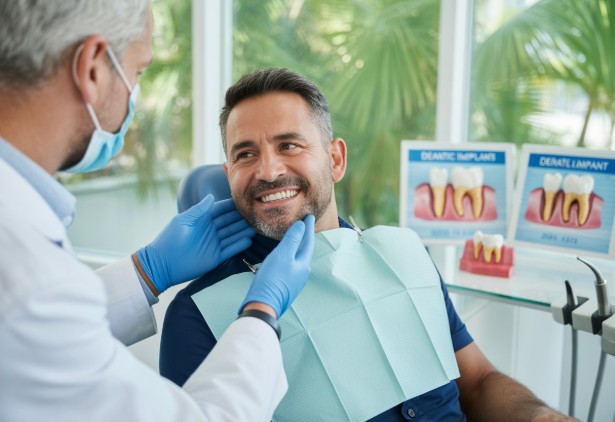
Diabetes can slow healing, reduce blood flow, and increase infection risk after implant surgery. When blood sugar is well managed before and after treatment, these risks drop, and implant success improves dramatically.
Diabetes slows healing because long-term high blood sugar damages small blood vessels and reduces circulation to the surgical site.
With less oxygen and nutrients, your body forms new bone more slowly, and osseointegration takes longer.
Ongoing inflammation is also more likely, which can undermine long-term implant stability.
People with diabetes face higher infection risks after implant surgery. High blood sugar weakens your immune system, so your body can’t fight bacteria as well.
Peri-implantitis is a severe infection that can develop around the implant. It destroys the bone that supports your new tooth.
Research shows that diabetes affects the soft-tissue seal around dental implants. Bacteria can more easily get in and cause infection.
This can lead to bone loss and even implant failure if you don’t treat it quickly.
Studies have found statistically significant differences in dental implant complications between diabetic and non-diabetic patients. The risk of implant failure goes up when diabetes isn’t controlled.
Lower bone density in diabetic patients also contributes to stability issues. The jawbone may not support the implant over time.
Research shows dental implants in diabetic patients have a higher failure risk compared to those without diabetes. One big review of 89 studies found that diabetics have about 1.8 times greater odds of implant failure.
The good news? Blood sugar control really matters. Studies indicate that patients with controlled type 2 diabetes have success rates similar to non-diabetics.
Poorly controlled diabetes, though, drops implant success rates.
Key Factors Affecting Success:
The relationship between diabetes and dental implant success really depends on how well you manage your diabetes. If you keep glucose levels healthy with medication, diet, and regular checkups, you can expect good results.
People with diabetes face additional challenges, but dental implant success is still possible. Working closely with your dental team and endocrinologist helps you succeed.
The data show that with proper glycemic control and careful planning, many diabetic patients enjoy long-term implant success, just like non-diabetic folks.
Most diabetic patients follow a similar implant timeline to non-diabetics, but healing can take longer—sometimes up to 50% more—if blood sugar is unstable or complications develop. Careful planning helps avoid rushing into crowns before the implant is truly ready.
If you keep your diabetes under control, you can expect healing times similar to those of non-diabetic patients. The first osseointegration phase usually takes three to four months for lower implants and four to six months for upper ones.
Blood sugar control has the most significant impact. When your diabetes is well managed over time, your body can form new bone at a steadier, more predictable pace.
Dental implants for diabetics work best when you team up with your dentist and diabetes care provider. Regular monitoring during healing helps catch problems early.
Key factors for normal healing:
Uncontrolled diabetes can delay healing and push full integration to six to nine months or longer.
Slower repair, reduced blood flow, and a weaker immune response raise the risk of infection or incomplete bone fusion, so your dentist will monitor the implant site more frequently and cautiously.
Protect your health and smile by reviewing implant risks, healing time, and diabetes control with a customized treatment plan at Boynton Implant and Cosmetic Dentistry. Contact us to begin.
If you’re ready to get started, call us now!
Certain medical conditions and lifestyle habits can make a routine implant procedure much riskier for people with diabetes.
If you have uncontrolled diabetes, your chances of complications go way up compared to folks with stable blood sugar.
Share your recent A1c results with your dentist, especially if they’ve been higher than your target range. This number reflects your average blood sugar control over the past few months.
Poorly controlled diabetes can slow recovery, increase infection risk, and weaken how your body responds to dental procedures.
Critical medical conditions that increase implant risks include:
If you take blood thinners, steroids, or certain diabetes meds, your dentist needs to know. These medications can mess with healing.
Your dentist and primary doctor should coordinate to adjust your meds before surgery. It’s always better when your healthcare team is on the same page.
Uncontrolled diabetes lets bacteria thrive. This increases the risk of infection after implant placement.
Smoking and diabetes together? That’s a risky combo for dental implants. Smokers with diabetes face failure rates two to three times higher than non-smokers.
Gum disease affects how dental implants integrate with your jawbone. If you have active periodontal infections, treat them before any implant surgery.
If you’ve already lost teeth due to gum disease, your dentist will want to review your situation.
High-risk oral and lifestyle factors include:
Skipping regular dental cleanings lets plaque and bacteria build up. That creates chronic inflammation, which can significantly disrupt healing.
When oral infections are present, it’s even harder to manage blood sugar.
At Boynton Implant and Cosmetic Dentistry, Dr. Michael Berglass brings decades of implant experience and advanced training, regularly treating patients with diabetes in South Florida.
The team uses 3D imaging, conservative timelines, and close coordination with physicians to design implant plans that respect each patient’s overall health.
Boynton Implant & Cosmetic Dentistry relies on 3D imaging technology to plan dental implant procedures for diabetic patients. The scans show your bone density and structure before anything begins.
The oral surgeon can spot nerves and blood vessels, so they know where to avoid trouble. This level of detail helps the team determine whether you need additional treatments first.
Sometimes, diabetic patients need bone grafting before they can get dental implants. The 3D scans also reveal whether gum disease requires attention.
The dental team talks with your endocrinologist before scheduling implants. They want to ensure your blood sugar is under control and stable.
Many oral surgeons prefer to see well-controlled, stable A1c results before moving forward and may ask you to check your blood sugar more often around the time of the procedure.
They also go over all your medications. Some diabetes meds need tweaking before and after surgery.
This coordination keeps everyone in the loop. Your endocrinologist can offer tips for managing your diabetes while you heal.
If you get your blood sugar under control and follow some key steps, you can really improve your odds with dental implants. The right prep before surgery—and careful attention afterward—help protect your implant and speed healing.
Blood sugar management comes first. Many doctors want to see evidence of reasonably stable A1c levels before surgery, although the exact target may vary based on your overall health.
Work with your diabetes doctor to get your numbers steady for several weeks before your procedure. Your dentist may request recent blood test results to confirm that your blood sugar levels are stable.
Uncontrolled diabetes can slow healing and make recovery riskier.
Oral hygiene needs to be top-notch before you go in. Brush twice daily, floss, and have any gum disease or infections treated.
Healthy gums and clean teeth reduce the risk of bacterial complications after implant placement.
Some patients need to adjust their diabetes medications before surgery, so the dental team will provide specific instructions on eating, drinking, and taking medication on the day of the procedure.
Post-operative care takes some extra effort if you have diabetes. Your dentist might prescribe antibiotics to help prevent infection, since diabetes can really mess with your immune system.
Make sure you take these meds exactly as your dentist tells you. Skipping doses or stopping early just isn’t worth the risk.
Blood sugar levels often spike after surgery because of stress and inflammation. It’s a good idea to check your glucose more often for the first few weeks.
If you notice any unusual readings, contact your doctor promptly. Early communication helps prevent minor issues from escalating into larger problems during the healing process.
Daily oral care matters even more after getting an implant. Brush gently around the surgery spot, use any mouth rinse your dentist recommends, and be careful not to irritate the area with floss.
Don’t skip your dental appointments. If you spot swelling, pain, or any odd discharge, call your dentist right away.
Smoking and highly processed foods can significantly slow healing. Choosing balanced meals, staying hydrated, and avoiding tobacco gives your body a much better chance of helping the implant bond with your jawbone.
Ready to replace missing teeth while managing diabetes safely? Discuss personalized implant options with the experienced team at Boynton Implant and Cosmetic Dentistry. Schedule your appointment now.
Can I get dental implants if I have type 2 diabetes?
Yes, many people with type 2 diabetes can safely receive dental implants when blood sugar is well controlled. Your dentist and physician will review your medical history, medications, and recent A1c results to decide if implant surgery and healing are reasonably safe in your situation.
Do dental implants take longer to heal if I have diabetes?
Dental implants may take longer to heal if you have diabetes because high blood sugar can slow blood flow, bone formation, and tissue repair. With good glucose control, careful planning, and regular follow-up, healing times are often similar to those of non-diabetic patients, especially in otherwise healthy adults.
Are dental implants riskier for people with poorly controlled diabetes?
Yes, dental implants are riskier for people with poorly controlled diabetes. High blood sugar increases the chance of infection, delayed healing, and peri-implantitis, which can damage supporting bone. Most dentists recommend improving diabetes control first, then reassessing implant options when your numbers and overall health look more stable.
What A1c level is considered safe for dental implant surgery?
There’s no single universal A1c cutoff, but many dentists and physicians prefer to see reasonably stable, well-managed A1c levels before implant surgery. Instead of focusing solely on a specific number, your healthcare team will consider trends, complications, and overall health to determine whether the timing of treatment is appropriate.
How can I lower my risk of implant failure if I have diabetes?
You can reduce the risk of implant failure by maintaining good blood sugar control, quitting smoking, and treating any gum disease before surgery. Excellent daily oral hygiene, regular cleanings, and timely follow-up visits enable your dental team to monitor healing closely and manage minor issues before they escalate.
Are there alternatives to dental implants if my diabetes is not well-controlled?
If your diabetes is poorly controlled, your dentist may recommend alternatives such as removable partial dentures, full dentures, or bridges until your health improves. Once blood sugar and complications are better managed, you can revisit implant options.
How often should I see the dentist after getting implants with diabetes?
Most diabetic patients with dental implants should see a dentist every 3 to 6 months. These visits allow your team to clean around the implants, check for gum inflammation or bone loss, review home-care habits, and catch early signs of infection or implant strain before damage occurs.

About Dr. Berglass
Dr. Michael Berglass, a dedicated dentist with over 25 years of experience, specializes in dental implants, cosmetic, and general dentistry in Boynton Beach, Florida. A proud alumnus of Stony Brook School of Dental Medicine (DDS, 1996), Dr. Berglass further honed his expertise with residencies in general practice and dental implants at North Shore-Long Island Jewish Hospital. His journey in dentistry has taken him from New York to North Carolina, and now to Florida, where he continues to offer top-notch dental care. Known for his wit and intellect, Dr. Berglass makes every patient's visit comfortable. A member of the American Dental Association and Florida Dentists' Association, he stays at the forefront of dental advancements. Dr. Berglass is committed to providing exceptional care and looks forward to welcoming you to his practice.
Reason To Smile

Phone
Address
2415 Quantum Blvd
Boynton Beach, FL 3342
Office Hours
Mon - Thurs: 8:30AM-5PM
Fri: 8:30AM-1PM
Sat - Sun: Closed


