
Originally published: January 2026 | Updated: May 2026
Reviewed by Dr. Michael Berglass
Medicare & Dental Implants: What Seniors Should Know in Boynton Beach, FL (And Alternatives)
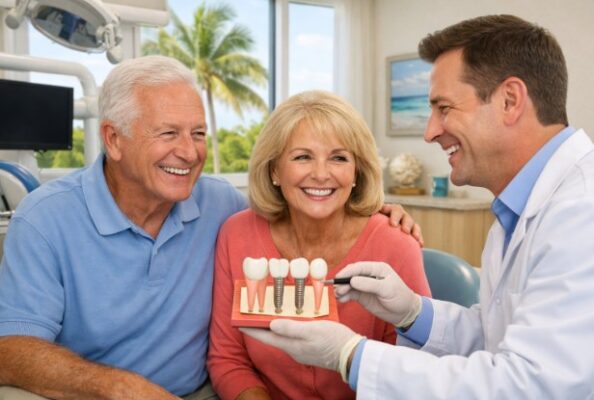
Missing teeth can make it tough to eat, speak, or even feel comfortable around others. Many seniors in Boynton Beach turn to dental implants as a permanent solution.
But the price tag makes people wonder: Does Medicare actually cover dental implants?
Original Medicare (Parts A and B) generally doesn’t cover dental implants. Routine dental care isn’t covered under standard Medicare benefits.
That leaves many seniors in Boynton Beach looking for other ways to pay for tooth replacement. Knowing your options and looking into different solutions can help you decide how to restore your smile.
There’s some good news, though. Some dental implants for seniors offer a permanent fix with great success rates.
You can sometimes get coverage through Medicare Advantage plans or standalone dental insurance.
This guide breaks down what Medicare does (and doesn’t) cover, along with some alternatives that might fit your budget and health needs in Boynton Beach.

Original Medicare won’t cover dental implants in most cases. Both Medicare Parts A and B treat dental care separately from medical care.
What Medicare Typically Excludes:
Your standard Medicare plan won’t help with dental implants or the surgery to place them. Whether you need one implant or several, you’ll pay the full cost yourself.
There’s a narrow exception. Medicare may cover 30% to 50% of oral surgery costs if the procedure is medically necessary, but this coverage doesn’t include the implants themselves.
This exception applies only to hospital costs for surgery in specific medical cases. If you need implant placement after an accident or because of a medical condition like cancer, Medicare could help with hospital fees. The actual implant costs still fall on you.
Most seniors see that traditional Medicare leaves them without coverage for implant placement and related dental work. If you want help paying for dental implants in Boynton Beach, you’ll need to look elsewhere.
If you’re ready to get started, call us now!

Original Medicare doesn’t cover most dental procedures, including dental implants. You’ll need to pay out of pocket or find alternative coverage for implant procedures.
Excluded Dental Services:
Medicare Parts A and B don’t cover dental equipment, such as implants, or the surgical placement process. The osseointegration phase, where the implant fuses with your jawbone, isn’t covered either.
You won’t get benefits for any stage of the implant process under traditional Medicare. That includes consultation, imaging, surgery, healing, and final crown attachment.
Routine dental care costs are your responsibility with Original Medicare. The focus is on medically necessary hospital and doctor services, not preventive or restorative dental work.
Medicare Part A might cover certain dental services if you get them during a covered hospital stay. For example, emergency dental surgery after an accident could qualify.
But these situations are rare and apply only if the dental work is part of emergency or complex medical care.
Medicare can pay for dental work if it’s directly tied to another medical procedure that Medicare covers. Dental services coverage applies when the dental work is essential to the success of your other medical treatment.
You might get coverage if you need dental extractions before radiation treatment for head or neck cancer. The dental work helps prevent complications from the radiation.
Medicare may also pay for dental services if you need a jaw exam before kidney transplant surgery.
Dental care needed to protect your general health or to ensure the success of a covered procedure can qualify for payment.
Sometimes, you need dental work before heart valve replacement surgery to reduce the risk of infection.
If you’re getting facial fracture repairs involving your teeth or jaw, the dental part may be covered as part of the overall treatment.
Coverage under Medicare Part A or B requires that dental services are “inextricably linked to, and substantially related and integral to the clinical success of” your other medical service. Your doctor and dentist need to coordinate and prove this connection.
Original Medicare doesn’t cover dental implants or most routine dental care. But Medicare Advantage plans offer an alternative that might include dental benefits.
Private insurance companies run Medicare Advantage plans. These plans must cover everything Original Medicare does, but many add additional benefits.
Some Medicare Advantage plans include dental coverage for services such as implants, cleanings, and dentures.
Important facts about coverage:
You’ll want to check each plan closely before signing up. Coverage amounts and out-of-pocket costs can vary widely from one plan to the next.
Many plans only cover dental implants when they’re medically necessary, not cosmetic.
Your dentist might need to provide paperwork explaining why they need to see you. Some plans only pay part of the total cost.
In Boynton Beach, you’ve got several Medicare Advantage options to compare. Review what each plan covers for dental services and confirm the annual maximum benefit. Pay attention to monthly premiums, deductibles, and copays for dental work.
Call the plans directly or speak with a licensed insurance agent to get details on dental implant coverage.
If you’re comparing Medicare Advantage dental benefits or need help estimating implant costs and alternatives, let Dental Implants Boynton Beach guide you through plan details and options—Schedule a consultation now.
If you’re ready to get started, call us now!
Many seniors think Medigap policies cover dental work, such as implants. This is a common misconception.
Medigap doesn’t cover routine dental or vision services because it only supplements what Original Medicare covers. Since Original Medicare does not cover dental implants, Medigap does not either.
Medigap can help cover certain dental procedures if Original Medicare covers them. That could mean jaw reconstruction after an injury or accident. It doesn’t help with routine dental care or cosmetic procedures.
You’ll need a separate dental insurance policy if you want coverage for implants. Standalone dental plans can offer comprehensive benefits that Original Medicare and Medigap simply don’t.
These plans work differently from your regular health insurance:
Seniors can get dental benefits through Medicare Advantage plans or standalone dental insurance. Each choice has different coverage and costs.
Your decision really depends on your dental health and your budget. Some Boynton Beach seniors feel that combining Medigap with a standalone dental plan provides the best overall coverage.
Before you schedule dental implant surgery, verify your coverage. Please have your Medicare card ready and call the number on the back to confirm which dental services your plan covers.
Follow these steps to check your coverage:
Call a few dental offices in Boynton Beach that work with Medicare patients. Most practices can help you verify your benefits before your first appointment.
Questions to ask your insurance representative:
If traditional Medicare doesn’t cover dental implants, ask about standalone dental insurance plans. These policies can help you cut down your out-of-pocket costs for implant procedures.
Reach out to local Boynton Beach Medicare agents who can review your current coverage and suggest plans with stronger dental benefits.
Sometimes, getting a little professional advice saves you from surprise bills and headaches down the road.
If dental implants aren’t right for your budget or health, you’ve still got options. Each alternative fits different needs and situations.
Traditional dentures remain the most affordable option for replacing multiple missing teeth. They cost less up front than implants and don’t require surgery.
You can choose full dentures if you’ve lost all your teeth, or partial dentures to fill smaller gaps. Dentures work especially well if bone loss makes implants tough or risky.
Dental bridges connect to your existing teeth and fill in spaces left by one to three missing teeth. Your dentist places crowns on the teeth next to the gap and attaches false teeth in between.
Bridges usually last 5 to 15 years and cost less than implants. They work best when you have strong teeth on both sides of the gap.
All-on-4 implants fall somewhere between traditional implants and dentures. Instead of one implant per tooth, this option uses just four implants to support a full arch.
All-on-4 for seniors provides stability with fewer fixtures, so you’ll likely pay less and heal faster. It’s a pretty clever compromise, honestly.
Implant-supported dentures combine the affordability of dentures with the benefits of implants. Two to four implants anchor your dentures, keeping them in place better than traditional dentures.
You’ll get more stability than with standard dentures, but the cost will remain lower than with full implants. This might be the answer if your regular dentures feel loose or just don’t sit right.
When you’re weighing alternatives to dental implants, think about your budget, jawbone health, and how many teeth you need to replace. There’s no one-size-fits-all, so take your time deciding.
Don’t wait to get clarity on your dental implant coverage under Medicare or Medicare Advantage—reach out to Dental Implants Boynton Beach for a written benefit verification and personalized care plan. Contact us to schedule your appointment.
Does Original Medicare (Parts A & B) cover dental implants?
Original Medicare (Parts A and B) generally does not cover dental implants or most routine dental services, such as cleanings, fillings, extractions, dentures, and implants. Coverage is limited to very specific medically necessary procedures tied to another covered inpatient/outpatient service.
Can Medicare Advantage (Part C) cover dental implants?
Some Medicare Advantage plans may offer dental benefits that include implants or related services, but coverage varies significantly by plan and location. Always check your plan’s Evidence of Coverage before assuming implants are covered.
What should seniors check in a Medicare Advantage plan for implant coverage?
When reviewing Medicare Advantage benefits, ask about: whether dental implants are included, annual dental maximums, cost-sharing, waiting periods, and whether your preferred dentist is in-network. Coverage levels differ widely across insurers.
Are dental implant alternatives covered by Medicare Advantage plans?
Some Medicare Advantage plans cover other dental services, such as routine exams and cleanings, and may also include dentures or other major restorative care, but coverage for implants is not guaranteed and may still require high out-of-pocket costs.
Can Medicare ever pay for dental services related to medical care?
Original Medicare may cover dental services only when directly linked to a covered medical procedure (e.g., oral surgery before a heart valve replacement), but this exception is narrow and rare.
Does Medicare Advantage coverage include dentures or routine dental care?
Many Medicare Advantage plans include dental benefits for routine care, such as cleanings and X-rays, and sometimes dentures, but the specifics vary by plan and may include additional premiums or network restrictions.
What options do seniors have if Medicare doesn’t cover dental implants?
If Medicare or your Medicare Advantage plan doesn’t cover implants, seniors often consider standalone dental insurance, dental discount plans, or financing options to help manage costs. Medigap plans do not add dental coverage.

About Dr. Berglass
Dr. Michael Berglass, a dedicated dentist with over 25 years of experience, specializes in dental implants, cosmetic, and general dentistry in Boynton Beach, Florida. A proud alumnus of Stony Brook School of Dental Medicine (DDS, 1996), Dr. Berglass further honed his expertise with residencies in general practice and dental implants at North Shore-Long Island Jewish Hospital. His journey in dentistry has taken him from New York to North Carolina, and now to Florida, where he continues to offer top-notch dental care. Known for his wit and intellect, Dr. Berglass makes every patient's visit comfortable. A member of the American Dental Association and Florida Dentists' Association, he stays at the forefront of dental advancements. Dr. Berglass is committed to providing exceptional care and looks forward to welcoming you to his practice.
Reason To Smile

Phone
Address
2415 Quantum Blvd
Boynton Beach, FL 3342
Office Hours
Mon - Thurs: 8:30AM-5PM
Fri: 8:30AM-1PM
Sat - Sun: Closed


