
Originally published: March 2025 | Updated: August 2026
Reviewed by Dr. Michael Berglass
Can You Eat After a Root Canal? Post-Procedure Dietary Guidelines

Soft foods can typically be eaten once the numbness from the local anesthesia has fully worn off, usually within a few hours of the procedure.
Dr. Michael Berglass, DDS, of Boynton Implant and Cosmetic Dentistry recommends sticking to soft, cool foods for the first 24 to 48 hours to protect the treated tooth and temporary filling.
Chewing on the treated side, hard or sticky foods, and very hot or cold items should wait until the tooth has fully healed and a permanent crown is placed.
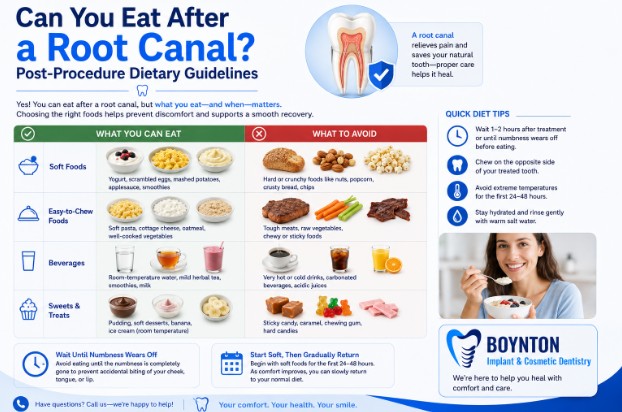
A treated tooth needs time and the right foods to heal properly — Dr. Berglass provides personalized aftercare guidance at the practice.
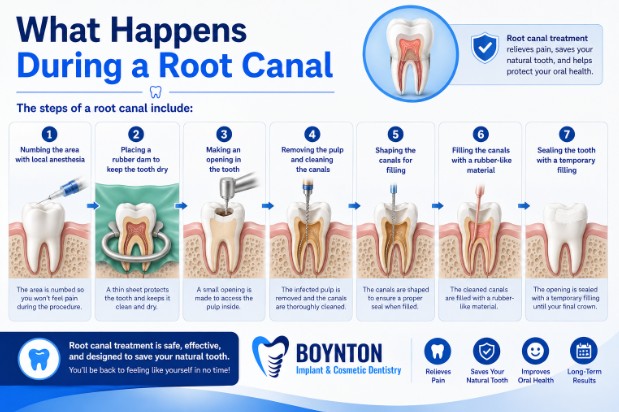
The American Dental Association describes a root canal as a treatment that repairs and saves a damaged or infected tooth instead of removing it.
Dr. Berglass or an endodontist removes the damaged pulp, cleans and shapes the root canals, then fills and seals them, which is why the tooth structure and eating comfort change temporarily afterward.
The steps of a root canal include:
A permanent crown is typically needed afterward to protect the tooth long-term.
Mild pain, sensitivity, slight swelling, and an unusual feeling when biting are common after a root canal and typically fade within a few days.
A systematic review of randomized trials found that NSAIDs and acetaminophen, taken alone or together, effectively reduce discomfort after non-surgical root canal treatment.
Persistent or worsening pain after the first few days is not typical and warrants contacting the dentist.
The treated tooth may feel different from surrounding teeth for some time, since the nerve tissue inside has been removed — this sensation is temporary and fades as the area heals.
If you’re ready to get started, call us now!
Eating the wrong foods too soon after a root canal can dislodge the temporary filling, irritate the healing tissue, or slow recovery. Following the recommended timeline protects the treated tooth while the permanent restoration is scheduled.
The tooth needs time to heal after a root canal. Eating the right foods speeds up this process. Soft, cool foods are best for the first few days, since they don’t irritate sensitive teeth or gums.
Hot foods and drinks should be avoided, since they can increase blood flow to the area and cause pain.
Chewing on the treated side is also not recommended, since it puts pressure on the healing tooth. A soft food diet helps manage discomfort while maintaining good nutrition during healing.
Eating the wrong foods after a root canal can cause problems. Hard or crunchy foods might damage the temporary filling, exposing the treated area to bacteria and infection.
Sugary and acidic foods can also harm the healing tooth, increasing sensitivity and slowing recovery. Ignoring these guidelines can lead to complications, sometimes requiring additional dental work.
Eating should wait until numbness from the local anesthesia fully wears off, which typically takes a few hours. A soft, cool diet for the first 24 to 48 hours, followed by a gradual return to normal foods, supports proper healing.
| Recovery Phase | What to Do |
| While still numb | Avoid eating or drinking anything until sensation returns, to prevent accidentally biting the cheek or tongue |
| Once numbness wears off | Begin with very soft, cool foods; avoid the treated side and skip straws |
| First 24–48 hours | Stick to soft foods like mashed potatoes, scrambled eggs, and soft pasta; avoid hard, hot, or cold items |
| After 48 hours | Gradually reintroduce firmer foods; continue avoiding very hard or crunchy items for about a week |
Right after a root canal, the mouth remains numb from anesthesia, making it difficult to chew safely. Waiting to eat until sensation fully returns prevents accidental biting of the cheek or tongue.
Once feeling returns, very soft, cool foods such as yogurt, smoothies, or applesauce are appropriate. Chewing on the treated side and using straws should both be avoided, since suction can disrupt healing.
During the first 24 to 48 hours, soft foods that require little chewing — such as mashed potatoes, scrambled eggs, and soft pasta — protect the temporary filling. Very hot or cold foods that could cause sensitivity should also be avoided.
After 48 hours, firmer foods can typically be reintroduced gradually. Very hard or crunchy foods are best avoided for about a week, and any pain when eating signals a return to softer foods until the discomfort resolves.
Uncertain which foods are safe during recovery from a root canal? Dr. Berglass provides personalized dietary guidance for a comfortable healing process at the practice.
If you’re ready to get started, call us now!
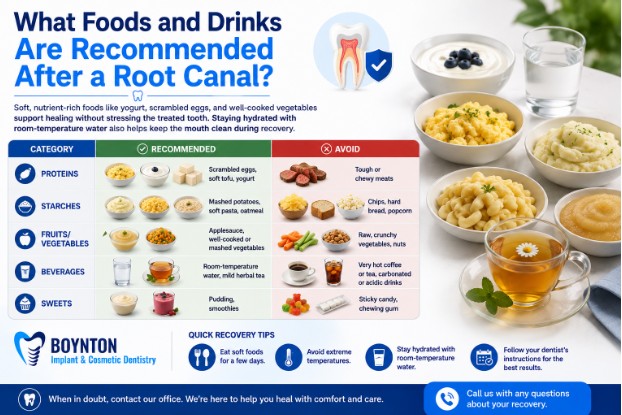
Soft, nutrient-rich foods like yogurt, scrambled eggs, and well-cooked vegetables support healing without stressing the treated tooth. Staying hydrated with room-temperature water also helps keep the mouth clean during recovery.
| Category | Recommended | Avoid |
| Proteins | Scrambled eggs, soft tofu, yogurt | Tough or chewy meats |
| Starches | Mashed potatoes, soft pasta, oatmeal | Chips, hard bread, popcorn |
| Fruits/Vegetables | Applesauce, well-cooked or mashed vegetables | Raw, crunchy vegetables, nuts |
| Beverages | Room-temperature water, mild herbal tea | Very hot coffee or tea, carbonated or acidic drinks |
| Sweets | Pudding, smoothies | Sticky candy, chewing gum |
Soft foods are the safest choice after a root canal, since they’re easy to eat and won’t stress the treated tooth. Yogurt, mashed potatoes, and applesauce are gentle on the mouth and provide good nutrition.
Scrambled eggs offer protein that supports healing, while pudding and smoothies satisfy a sweet craving without causing pain. Well-cooked vegetables, mashed with a fork, and soups cooled to room temperature also work well.
Staying hydrated matters during recovery, and water is always a safe choice. It helps wash away food particles and keeps the mouth clean.
Very hot or cold drinks can increase sensitivity, so room-temperature or lukewarm beverages work best. Herbal teas and mild juices without pulp are good options, and sugar-free sports drinks can help replace electrolytes when eating less than usual.
Hard foods like nuts and seeds risk cracking the temporary filling. Sticky foods like candy or gum can pull it out entirely.
Spicy foods may irritate sensitive gums, and acidic foods and drinks can cause pain in the treated area. Crunchy foods like chips or raw vegetables, along with chewy foods like tough meats, are best avoided until the tooth is fully healed.
Pain that worsens after the first few days, visible damage to the temporary filling, or swelling that doesn’t improve all warrant a call to the dentist. Catching problems early prevents the need for more extensive treatment later.
Persistent pain beyond a few days, or pain that worsens rather than improves, is not typical after a root canal and should be reported to the dentist. A dentist can determine whether the discomfort reflects normal healing or a developing problem.
Accidentally eating something hard is a common concern during recovery. Stopping immediately, gently rinsing the mouth with warm water, and calling the dentist if pain or visible damage occurs help prevent complications.
Follow-up appointments, including placement of the permanent crown, confirm that the tooth is healing correctly and ready for normal use again.
A root canal saves the tooth, but proper aftercare protects the results — Dr. Berglass and the team at the practice offer personalized recovery guidance; schedule a follow-up in Boynton Beach.
How long should someone wait before eating solid food after a root canal?
Solid food should wait until the numbness from the anesthesia has fully worn off. Chewing on the opposite side of the mouth for the first few days and sticking to soft foods for at least 24 to 48 hours protects the treated tooth.
What soft foods are recommended after a root canal?
Foods that require little chewing work best, including yogurt, scrambled eggs, mashed potatoes, smoothies, and applesauce. These soft foods are gentle on the treated tooth and easy to eat during the first few days of recovery.
Are there specific dietary restrictions to follow after a root canal?
Hard, crunchy, or sticky foods, as well as very hot or cold items, should be avoided for a few days. Acidic foods and drinks should also be skipped, since they can irritate the tooth and slow healing.
Is eating rice or other grains safe after a root canal?
Rice and small grains are best avoided for a day or two, since they can become lodged in the treated area. When grains are eaten, chewing carefully on the opposite side of the mouth reduces the risk of irritation.
Can someone eat normally right after a root canal, or is there a waiting period?
Normal eating isn’t recommended right away. Waiting until the numbness wears off and then sticking to soft foods for one to two days allows firmer foods to be gradually reintroduced as comfort improves.
What should be done if something hard is accidentally eaten after a root canal?
Eating should stop immediately, followed by a gentle rinse with warm water. Calling the dentist right away if pain or damage is noticed allows any problems to be checked and addressed promptly.
How long does root canal recovery typically take?
Most patients feel back to normal within a few days, though the tooth may remain slightly sensitive for longer while surrounding tissue finishes healing. A follow-up visit, often for a permanent crown, typically completes the recovery process.
Can pain medication help with discomfort after a root canal?
Yes, NSAIDs and acetaminophen, taken alone or together, have been shown in clinical research to reduce discomfort after non-surgical root canal treatment. Patients should take any prescribed medication as directed by the dentist.
Why does a root canal require a permanent crown afterward?
A tooth that has undergone a root canal loses much of its internal structure and becomes more brittle over time. A permanent crown protects the weakened tooth from cracking and allows normal biting and chewing to resume safely.

About Dr. Berglass
Dr. Michael Berglass, a dedicated dentist with over 25 years of experience, specializes in dental implants, cosmetic, and general dentistry in Boynton Beach, Florida. A proud alumnus of Stony Brook School of Dental Medicine (DDS, 1996), Dr. Berglass further honed his expertise with residencies in general practice and dental implants at North Shore-Long Island Jewish Hospital. His journey in dentistry has taken him from New York to North Carolina, and now to Florida, where he continues to offer top-notch dental care. Known for his wit and intellect, Dr. Berglass makes every patient's visit comfortable. A member of the American Dental Association and Florida Dentists' Association, he stays at the forefront of dental advancements. Dr. Berglass is committed to providing exceptional care and looks forward to welcoming you to his practice.
Reason To Smile

Phone
Address
2415 Quantum Blvd
Boynton Beach, FL 3342
Office Hours
Mon - Thurs: 8:30AM-5PM
Fri: 8:30AM-1PM
Sat - Sun: Closed


